MikroTik Manager: Centralized SD-WAN Management for Modern Networks
Managing multiple routers across branches, offices, and remote locations has always been one of the biggest challenges for network administrators.
When dozens or even hundreds of devices need configuration updates, security policies, and monitoring, manual management quickly becomes inefficient.
This is where MikroTik Manager and SD-WAN technologies come into play.
In this article, we will explore how MikroTik Manager platforms powered by SD-WAN concepts simplify network operations, automate configuration, and provide centralized visibility for distributed infrastructures.
What is MikroTik Manager?
MikroTik Manager refers to platforms or systems designed to centrally manage multiple MikroTik routers from a single interface.
MikroTik devices run RouterOS, a Linux-based operating system designed for advanced routing, firewall, VPN, and bandwidth management capabilities.
While RouterOS provides powerful features, managing many routers individually can become complex.
A MikroTik Manager solution typically provides:
Centralized configuration management
Network monitoring dashboards
Automated provisioning
Security policy deployment
VPN orchestration between sites
Remote troubleshooting tools
Instead of accessing each router individually through Winbox or CLI, administrators can control the entire infrastructure from a single panel.
What is SD-WAN and Why It Matters for MikroTik
SD-WAN (Software-Defined Wide Area Network) is a networking architecture that uses software to centrally control connectivity between different sites and cloud environments.
Unlike traditional WAN architectures that depend on expensive MPLS links, SD-WAN allows companies to use multiple internet connections while intelligently managing traffic.
Key SD-WAN capabilities include:
Intelligent path selection
Automatic failover between WAN links
Traffic prioritization
Encrypted overlay networks
Centralized policy management
For organizations using MikroTik routers, an SD-WAN management platform can transform a group of independent routers into a coordinated, centrally managed network fabric.
Key Features of a MikroTik Manager Platform
A modern MikroTik SD-WAN Manager platform usually includes several advanced capabilities designed for IT teams, MSPs, and ISPs.
1. Centralized Dashboard
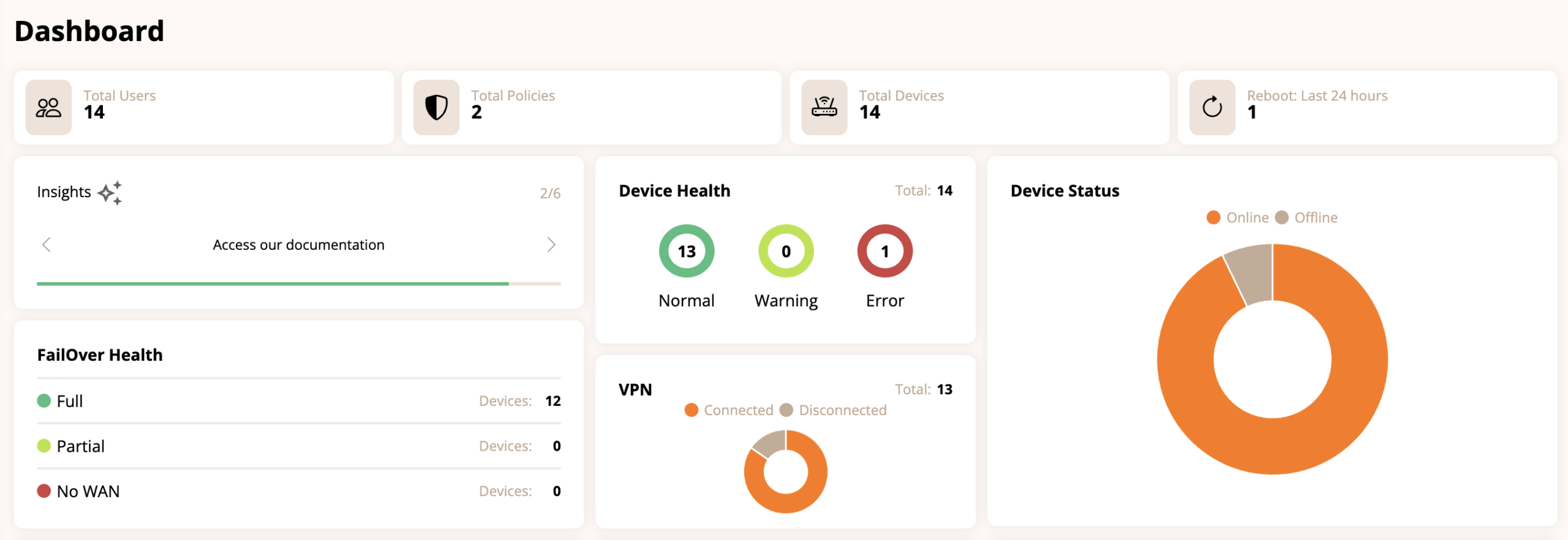
Administrators can view all routers, links, and network health from a single interface.
Typical metrics include:
Link availability
Device CPU and memory
Traffic usage
VPN status
SLA monitoring
This visibility dramatically reduces troubleshooting time.
2. Automated Configuration Deployment
Instead of configuring routers one by one, administrators can deploy configurations globally.
Examples include:
Firewall policies
VLAN structures
Routing policies
QoS rules
Security settings
This eliminates configuration drift between branches.
3. WAN Failover and Load Balancing
One of the most valuable SD-WAN features is automatic failover.
If a primary internet link fails, traffic automatically moves to another available link.
Benefits include:
Higher uptime
Business continuity
Better application performance
4. VPN Orchestration Between Branches
Traditional VPN configuration between multiple sites becomes complex very quickly.
With centralized orchestration, administrators can deploy site-to-site VPN tunnels automatically, dramatically reducing setup time. (mikrotiksdwan.com)
5. Security and Policy Enforcement
A MikroTik Manager platform can enforce consistent security policies across all routers.
Common security features include:
Firewall policy templates
Content filtering
Intrusion prevention
Traffic inspection
This ensures every branch follows the same security standards.
Benefits of Using MikroTik Manager
Organizations managing multiple locations benefit significantly from centralized management.
Simplified Network Operations
Managing distributed networks manually can be time-consuming.
Centralized management reduces operational complexity by allowing administrators to configure and monitor the entire infrastructure from a single interface.
Faster Deployment of New Branches
With automated provisioning, a new office router can be deployed in minutes instead of hours.
This concept is often called Zero-Touch Provisioning (ZTP).
Improved Network Reliability
By using multiple internet links with failover and intelligent routing, SD-WAN increases network uptime and ensures business-critical applications remain available.
Reduced Operational Costs
SD-WAN enables companies to use cost-effective internet connections instead of expensive private circuits while maintaining performance and reliability.
Use Cases for MikroTik Manager
A MikroTik Manager platform is particularly useful for:
Managed Service Providers (MSPs)
MSPs often manage hundreds of routers across different clients.
Centralized management dramatically improves efficiency.
Internet Service Providers (ISPs)
ISPs can automate device configuration and monitoring across customer networks.
Enterprises with Multiple Branches
Companies with multiple offices benefit from:
unified security policies
centralized monitoring
simplified VPN management
The Future of MikroTik Network Management
As networks become more distributed and cloud-dependent, centralized control becomes essential.
Modern MikroTik Manager platforms powered by SD-WAN technologies enable organizations to transform traditional networks into automated, intelligent infrastructures.
By combining:
centralized orchestration
automated configuration
intelligent traffic management
organizations can achieve higher performance, improved security, and simplified operations across their entire network.
✔ Conclusion
MikroTik routers are widely known for their flexibility and powerful networking capabilities. However, managing many devices manually can become a challenge.
A MikroTik Manager solution integrated with SD-WAN concepts solves this problem by providing centralized management, automation, and advanced networking features.
For businesses operating multiple branches, service providers, or IT teams managing large infrastructures, adopting a MikroTik Manager platform can significantly improve network efficiency and scalability.